A couple years ago, Michele and I rode our bikes from our home to Ellicottville, a 60-ish mile trip from the traffic-heavy suburban streets to the traffic-absent rural roads. Our journey along Route 240 took us past scenic farms, stately and dilapidated houses, along pastures and creeks, and by chapels painted stark white and woods colored different shades of green.
Along the way we rode by a few cemeteries. One of them was particularly intriguing. There was a small sign at the side of the road, marking a path through the woods. I glimpsed a few headstones through the trees as I pedaled on, making a mental note to keep the cemetery in mind so I could one day return and explore it.
On a recent cold, wet, dreary day in November, I decided to go look for the cemetery and to explore others as I made my way to it.
My first stop was Cobble Hill Cemetery on Boston State Road (Rt. 227). An eponymous iron arch marks the entrance to the burial ground, and if there was ever a fence around the lot, it’s gone.
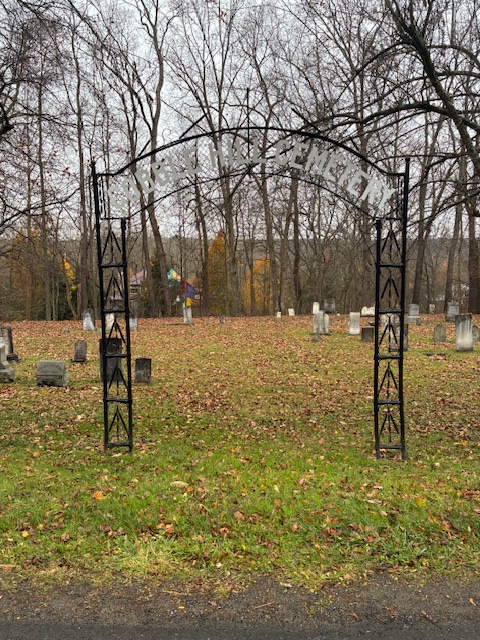
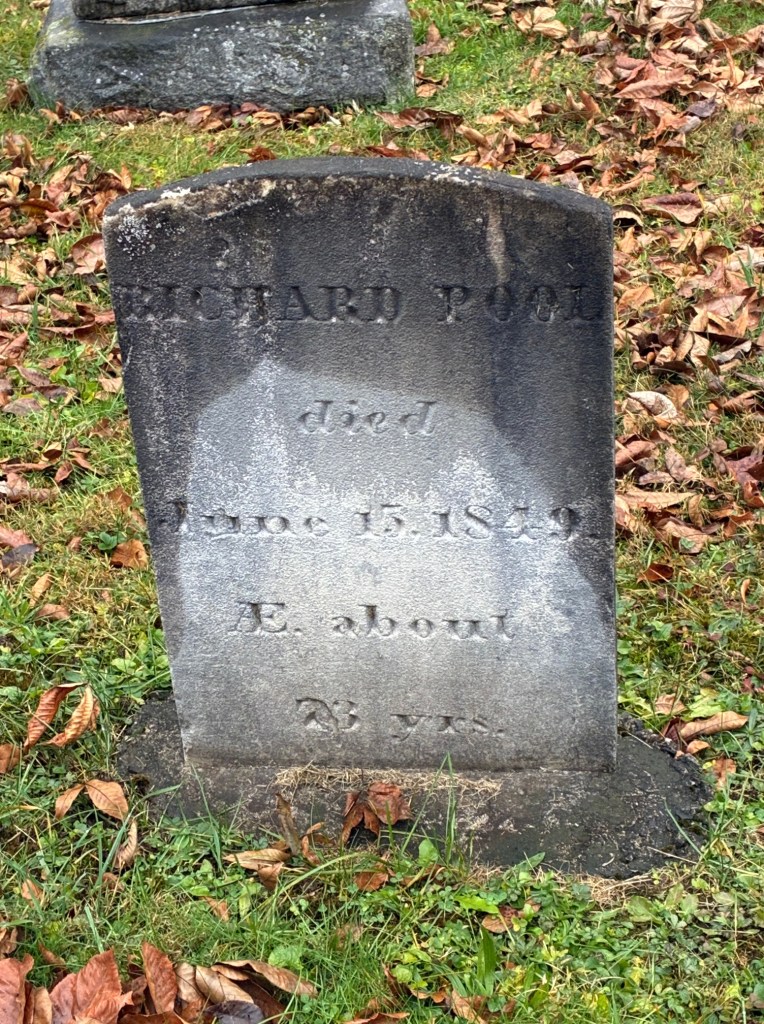
According to Find a Grave, the earliest burial at this cemetery occurred in 1816, although many of the stones are indecipherable, so there may have been earlier interments. Some stones list the departeds’ ages very precisely, including the months and days of their lives. For example, Jane Eliza Drake died on May 21, 1861 aged 40 years, 5 months, 22 days. Others aren’t as detailed. A few yards away marks the grave of Richard Poole, who died in 1849: “About 23 years old,” it says simply.
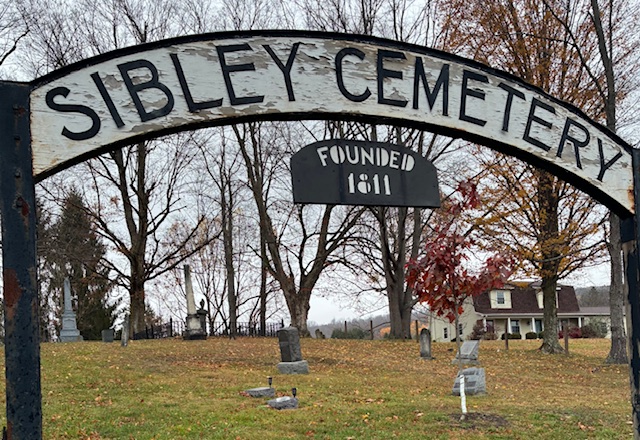
My next stop was Sibley Cemetery in Concord on Sharp Road, off Route 228 (which is also known as Springville-Boston Road). It’s a pretty cemetery on a steep hillside set between two houses. Several Sibley family members occupy the yard. The entryway arch indicates the cemetery was established in 1811, the year before British soldiers invaded and burned the little village of Buffalo thirty miles to the north. One resident of the cemetery, William H. Dye, was a member of the New York Militia during the War of 1812.
In this cemetery, a huge stump of a tree seems to have displaced a few stones, which lie at odd angles against it.
I drove on to Route 240 and found the cemetery I had been looking forward to: Bond Cemetery – also known as Thomas Corners Cemetery – about two miles south of Springville. A little sign by the side of the road is the only marker. There is no indicator as to the age of the cemetery, but its earliest death dates on the markers start in the early 1840s.
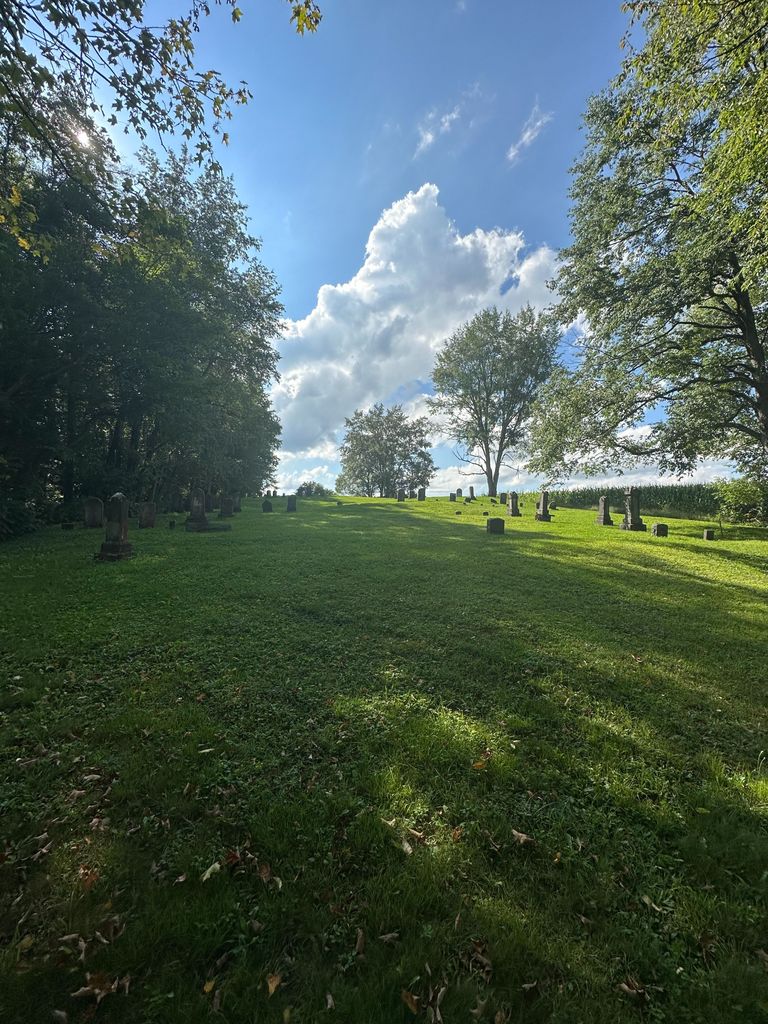
I walked up the wide, grassy trail framed by woods on the left and a house on the right. The graveyard is mostly treeless, and the trees that stand had already lost their leaves for the year. At the top of the knoll is a pretty view of the hills and farms to the north. Occasionally came the sound of gunfire – it was hunting season in this part of the region.
I stood for a few minutes, looking at the surrounding hills and the close woods, thinking about all three cemeteries, the family histories they hold, wondering what the individuals’ occupations may have been in these rural parts of Western New York before electricity, modern transportation and modern medicine. As I walked back to my car, I wondered if the only visitors to these graves were the caretakers who maintained these plots of land and if any descendants of these people under the stones ever visited their ancestors.
In the movie Caddyshack, the loud-mouthed developer Al Czervik declares that the “biggest waste of prime real estate are golf courses and cemeteries.” But although graveyards like the ones I walked through are old and rarely visited by descendants, they are historical markers to not only an individual’s past, but of a past time period. Walking through them raised my curiosity to learn more about the history of our region and the contextual period in which the people lived.
(Note: the bottom photo is from the Bond Cemetery page on FindaGrave.com. Photo by Brian Sherwood)

 The Resting Rock
Leave a comment