Airman First Class Clifford Fisher, Language Specialist
Among the dozens of color slides from Airman First Class Cliff Fisher’s tour of duty is a photo of him posing on a beach on the island of Baengyeong-do, looking out to sea. There’s no indication of where exactly he was standing, but his gaze toward the horizon is symbolic of his responsibilities when he accepted an assignment to spend six months on the island, which sits just above 38 degrees latitude in the Yellow Sea – just 11 miles from the North Korea coastline.
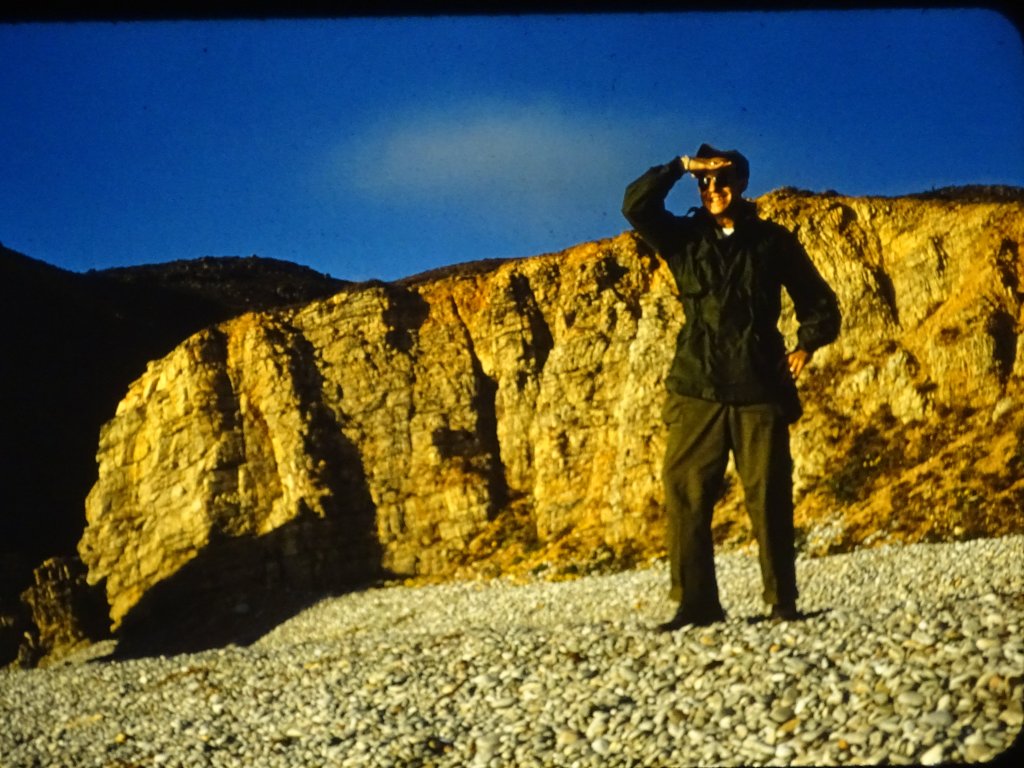
Smaller in area than Grand Island, New York, which splits the Niagara River flowing between Lake Erie and Lake Ontario, Baengyeong-do wasn’t exactly where he had envisioned himself when he enlisted two years earlier, however.
As the Korean War heated up during his years at Holy Cross College, the United States was once again drafting its young men into military service. Rather than wait to be drafted after graduation, Fisher figured that enlisting might give him some level of control over where he’d have to serve his country. He enlisted in the Air Force on July 14, 1952.
Following basic training, Fisher volunteered for the Russian Language School in Syracuse, since he found he was pretty proficient in foreign languages during high school and college. He spent eight-hour days for 12 months learning how to understand, write, and speak a language with an entirely different alphabet and sentence structure – including how to curse in Russian.
“What swears did you learn in Russian,” we’d ask as kids.
“ёб твою мать,” he’d say. Yob tvoyu mat.
“What does that mean?”
“Never mind,” and he’d smile. Good thing for him the Internet wasn’t around when we were young.
Halfway through his year-long training, the Korean War armistice was signed in July, 1953. But the truce was tenuous; after all, it was still the Cold War. Just a month after his wedding to Betsy Quill, and after completing the course in January of 1954, he was given his next assignment: he was heading to Japan that April to put his newly minted Russian language skills to use.
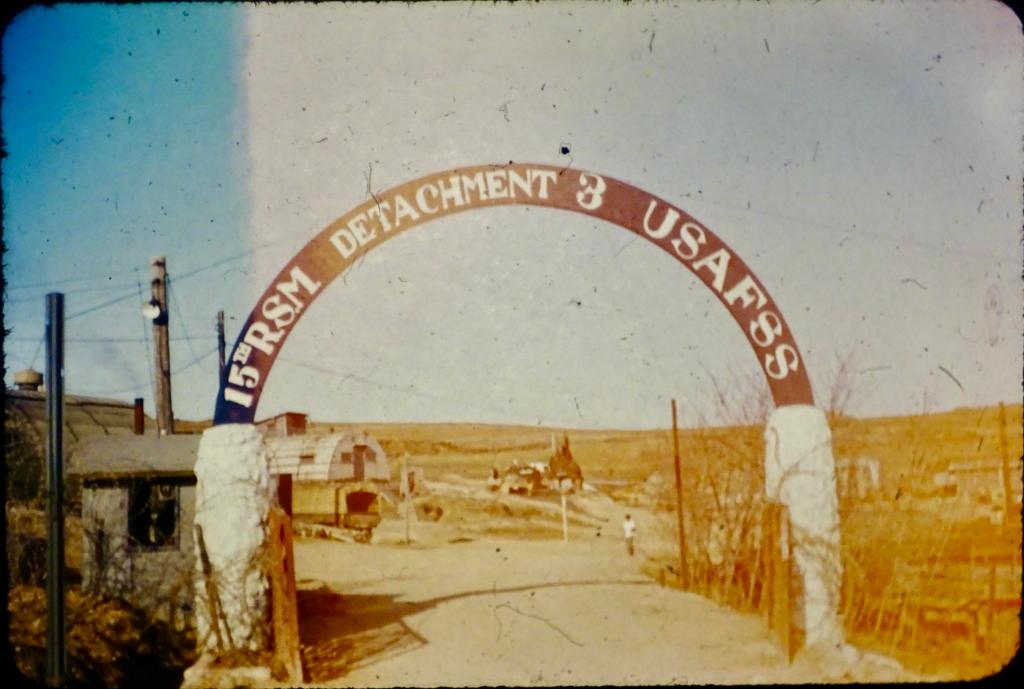
Japan ended up being a temporary stop, however. Fisher accepted a six-month assignment with the 15th Radio Squadron Mobile Unit, Detachment 3, and arrived at Baengyeong-do on September 23, 1954.
The U.S. Air Force Security Service (USAFF) had set up operations on the island – known as Py-Do among those who served there – in 1950 to provide tactical intelligence in support of air combat operations and, following the war, continued monitoring of Soviet and North Korean air activity.
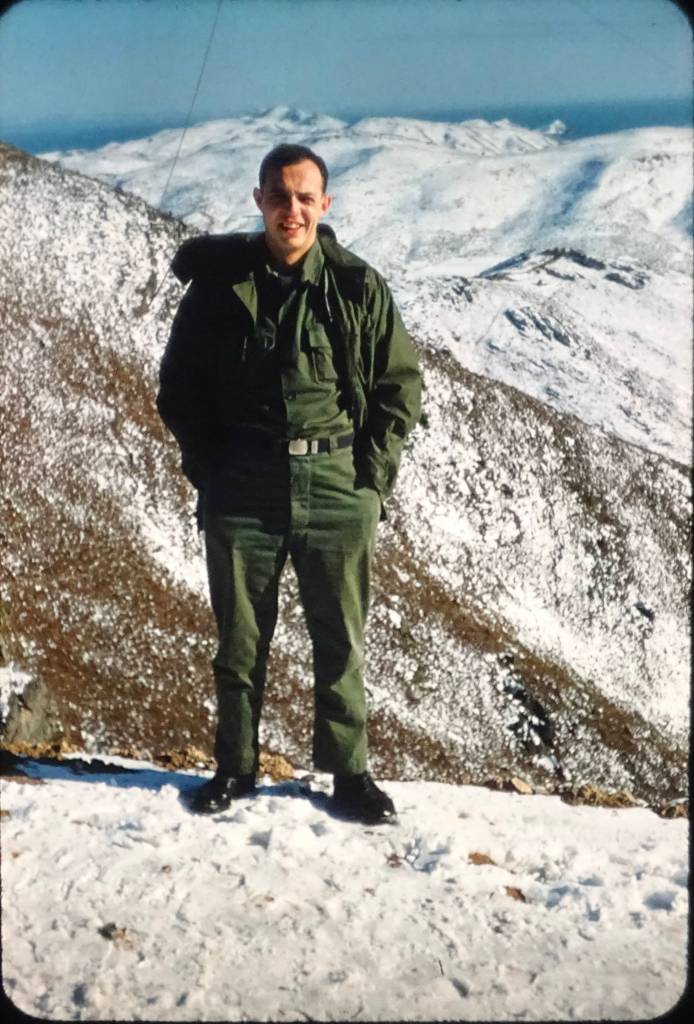
As an Airman and language specialist, Fisher would sit in the Quonset hut that served as the radio shack, wearing a set of headphones, listening to the chatter of the Russian pilots on their training and patrol missions over the Yellow Sea.
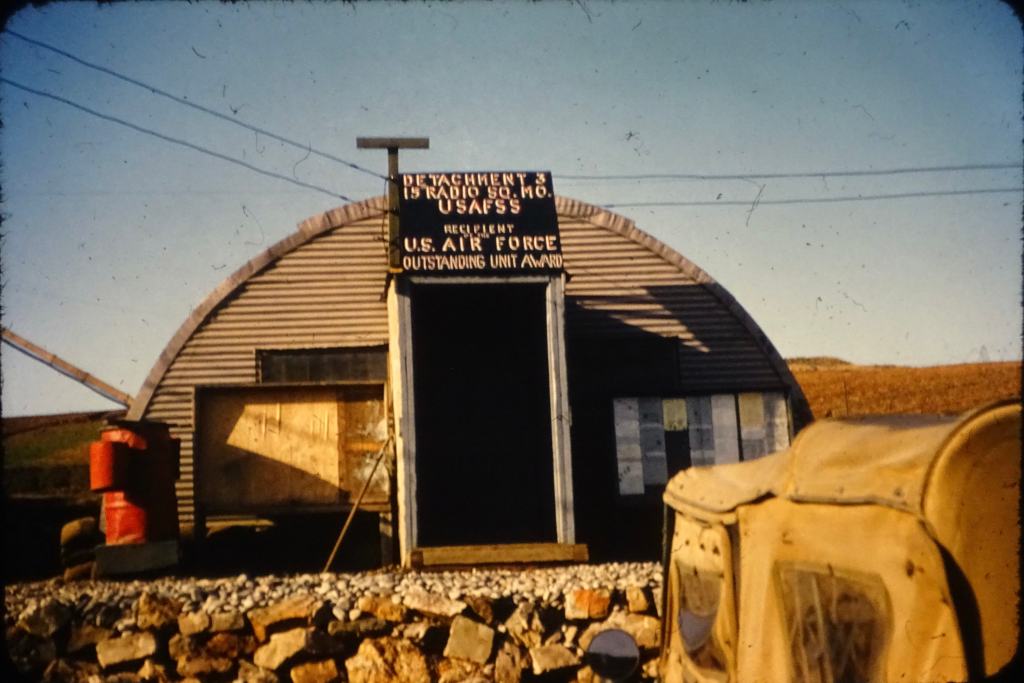
He had needed special security clearance for the assignment. In order to be granted security clearance, FBI agents investigated his background, which included interviews of his neighbors back home. Following a couple of the agents’ visits, neighbors would call Fisher’s mom: “Is Cliffy in trouble?” they’d ask.
The radio outpost was up a winding, rutted and dangerous road. Each day he and his fellow airmen would ride in the rear bed of a cargo truck, protected from the wind with a canvas cover. In winter the road would ice over, becoming treacherous, and the truck would slip and slide on the road, perilously close to the sheer drop on the journey. The passengers would jockey for position near the rear gate so they could bail out if they felt the truck was about to roll over. More than once, Fisher jumped out, sensing danger. Fortunately for the ones left inside, it never did.
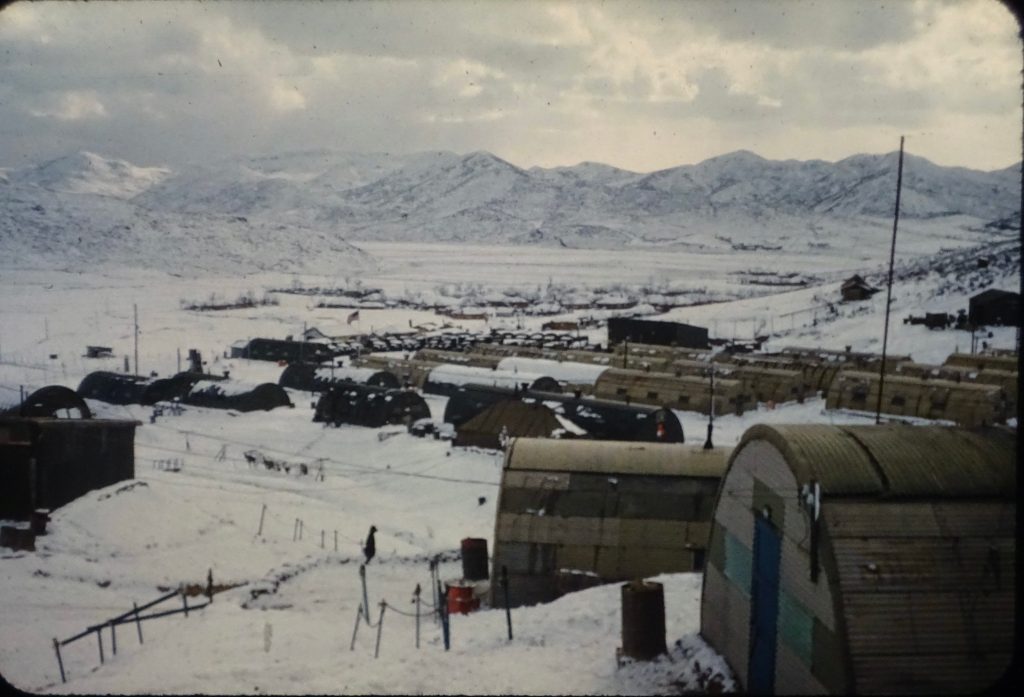
The radio transmissions were as close as he got to the Russians, and he never engaged in combat. The only fighting he was involved in was a mess hall brawl one evening that resulted in a large coffee tureen getting knocked over. He chipped a tooth of a guy he ended up fighting. Ironically it was a Holy Cross college ring (likely blessed by a priest) that did the dental work.
“What were you fighting about?” I once asked.
“I don’t remember,” he replied. “We were probably just mad about being stuck there.”
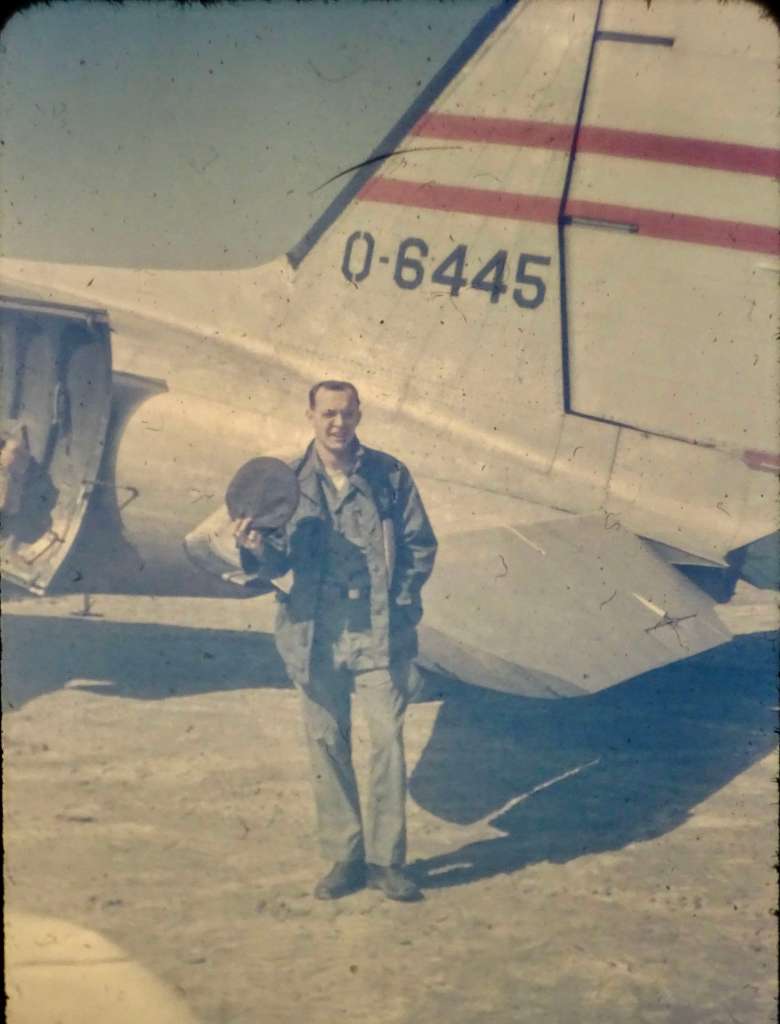
On April 25, 1955, a C-47 landed on Sagot Beach, its sand compact enough to be used as a natural airfield. Before boarding, he posed near the tail of the plane, playfully doffing his hat for a quick photo. He then climbed through the rear door, and soon the plane sped down the beach, took off and headed for Japan.

 The Resting Rock
Leave a comment