In 2014, one of the racing yachts in the Volvo Ocean Race 2014-15 slammed into a reef in the middle of the Indian Ocean. The $6 million yacht, Team Vestas Wind, was sailing along at 19 knots in the dark when she hit craggy rocks about 250 nautical miles from the island of Mauritius. The crew was rescued two days later. The grounding was dramatically caught on video.
A more recent incident caught on video involved a skipper who had set his sailboat on autopilot so he could nap below. A crew from another boat tried to alert him before he crashed into a large rocky outcropping.
It’s hard to believe that a seasoned professional crew, driving a brand new, high-tech, multi-million dollar boat loaded with the latest navigation electronics, or a paid charter captain, would make such a horrible mistake. But, as the saying goes, if a sailor says he hasn’t run aground, he’s either lying or he just hasn’t done it yet.
Both incidents made me recall the first time my navigational error and carelessness caused me to hit bottom.
I wasn’t driving a state-of-the-art racing yacht with GPS navigational charts at 19 knots. I was sailing a 21-year-old sailboat with a broken knotmeter and a depthmeter that looked like a clock. My sailing experience at the time was four years old, limited mostly to day cruises on sunny days or under beautiful sunsets just a mile or so off Buffalo Harbor.
Although we and the boat came away from our grounding uninjured, it was a very nerve-wracking few minutes. Here’s what happened:
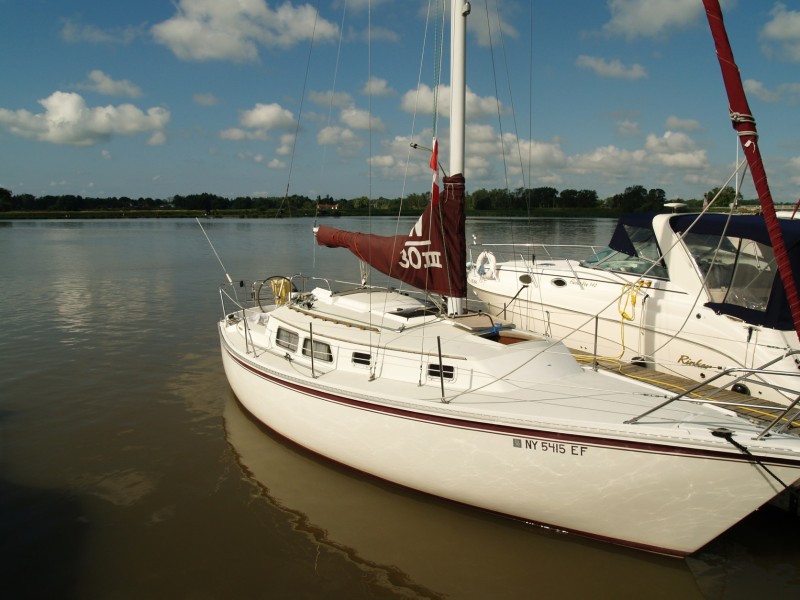
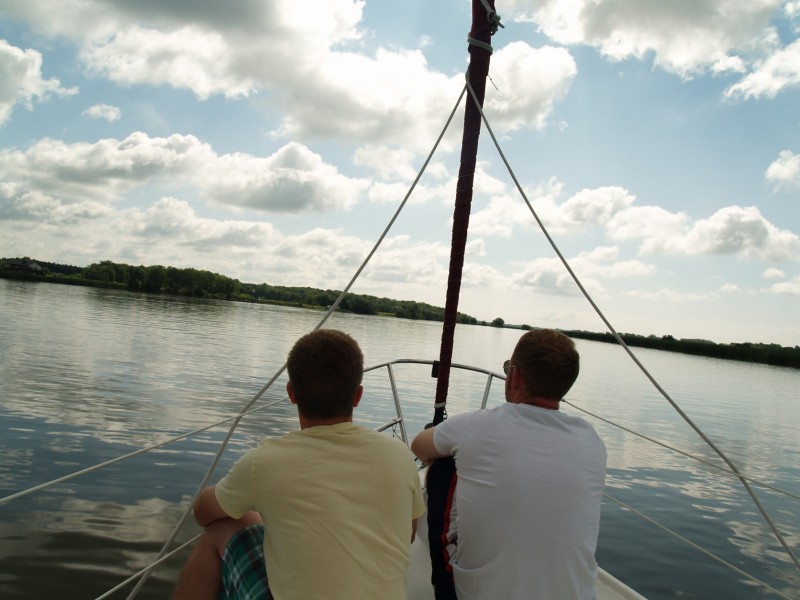
There were eight of us on a sailing weekend aboard Second Epic, a 1987 Newport 30-III – my two brothers; my brother-in-law; and my four nephews.
Our original plan was to sail from Buffalo to Port Colborne’s Sugarloaf Harbour Marina. But after confirming the weekend with the guys, I realized that Port Colborne’s annual celebration, known as Canal Days, occurred on the same weekend. It’s a very popular weekend for the marina, with boaters and sailors coming from different marinas to party all weekend, so all of the transient slips were booked.
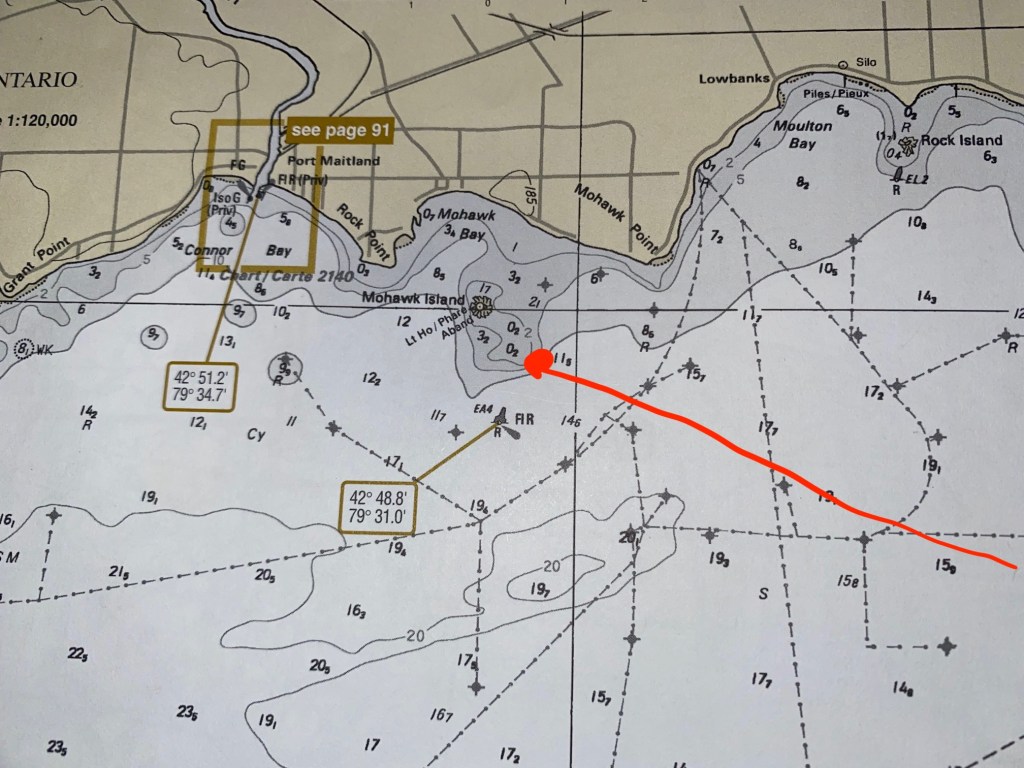
We decided to continue with our weekend plans but sail 18 nautical miles farther west along the Canadian coastline to Port Maitland, then motor up the Grand River to a marina in Dunnville. It looked like a long trip, but everyone was excited for the adventure.
We cast off lines at 7 a.m. from Buffalo for an estimated 13-hour journey to Port Maitland. Winds began light but picked up around lunch time.
Although I knew how long we had to sail, I didn’t really appreciate how long we had to sail….By mid-afternoon I was wondering if we’d make it before nightfall.
At 5 p.m., I was at the helm and could finally see the lighthouse and breakwall off Port Maitland emerge on the horizon. But I had also noticed a buoy far out to port – much farther than I wanted to travel. Due to the wind direction, we’d have had to turn south, almost the opposite direction from our destination, just to make it around the buoy. The wind and waves had increased a bit during the afternoon and we were all feeling fatigued and ansty to make landfall. Despite a warning from another sailor the week before to “take Rock Point wide,” I thought we were far out on the lake enough to be safe.
A few minutes later, I noticed the needle on my old depth meter begin to descend from 60 feet, where it had been for hours. The dial moved a bit fast, down to 50 feet, 45 feet, 30 feet.
Suddenly, the dial on the depth meter dropped to 15 feet. My brother-in-law Brian was standing next to me at the wheel. “I think we need to tack out soon,” I said.
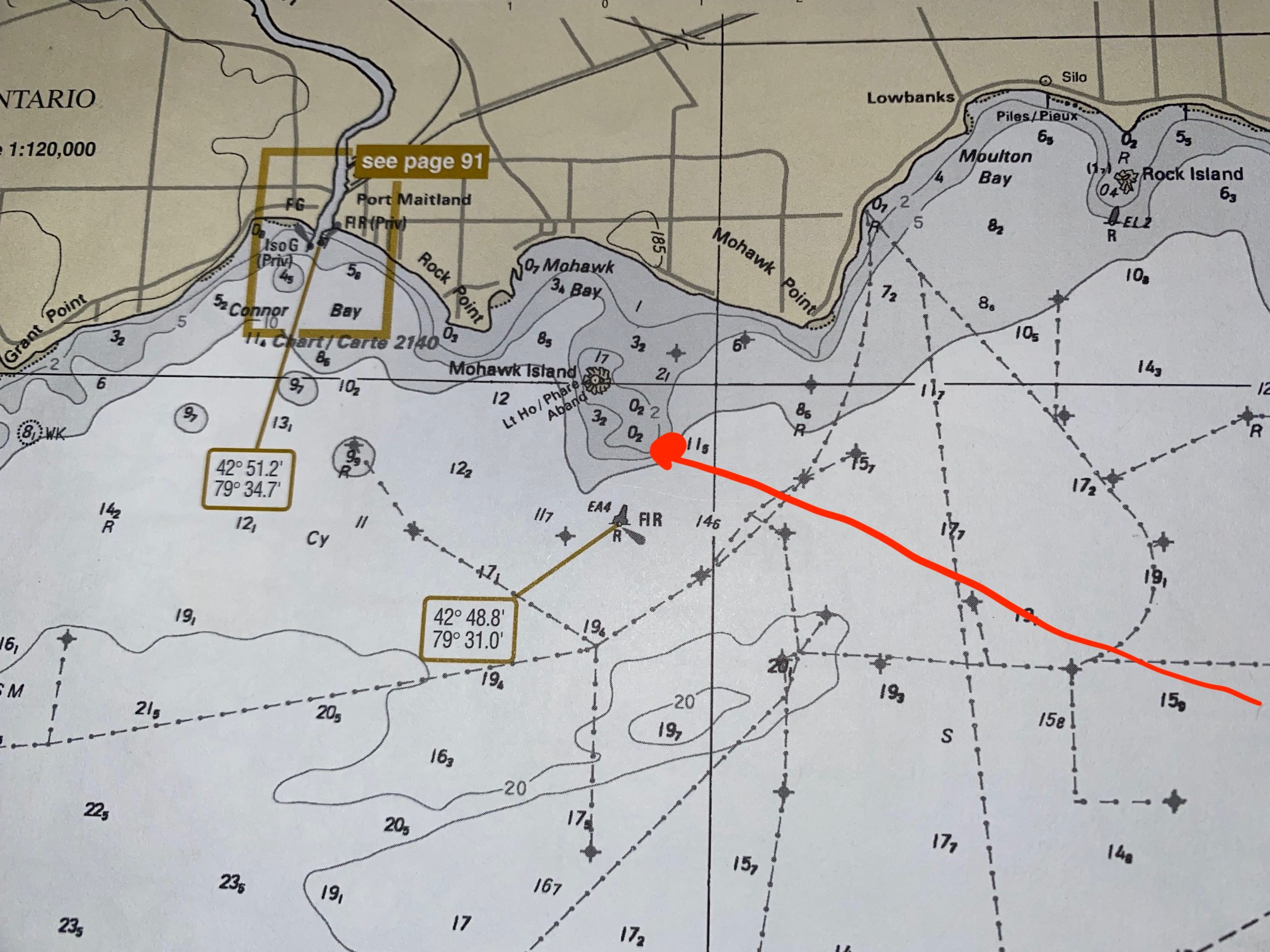
I had no sooner said that when suddenly: CLUNK! The boat lurched forward. The rig shook. We had hit bottom. Solid rock. There was a grinding sound as the keel scraped along the shoal.
I panicked. I told my brother-in-law Brian to take the helm, then jumped below and checked the bilge. Still dry. I ran up and scanned the horizon. We were the only boat on the lake. “What do we do now?” I thought to myself.
Brian, who had grown up sailing, took charge. “Everyone get to the bow,” he said calmly. Everyone did as he said, and I took the wheel back from him. He told me to turn the wheel all the way to the right as he let out the boom.
Second Epic bobbed in the waves, clunking along and scraping the bottom as she changed direction. After a few seconds, her bow pointed toward the open lake and the awful scraping stopped. I spun the wheel to center and she sailed off the rock and gained speed. I watched the depthmeter quickly dial back to 60 feet. It was several minutes before anyone said anything. We had likely been stuck for less than a minute, but it felt like a long time. I don’t think my heart stopped pounding until the next morning.
We made it safely to Dunnville Boat Club up the Grand River as the sun was setting at 8:30 p.m. I told the watchman at the boat club what had happened.
“Oh, people do that all the time,” he said. “One guy set his autopilot using his GPS straight for the harbor entrance and didn’t pay attention. He sunk his boat.”
When the season was over that September and the boat was lifted out of the water, I checked out the hull and the keel. There was light scraping at the front edge of the keel, but that was it. We had been lucky. Much luckier than the crew of Team Vestas Wind had been.

 The Resting Rock
Leave a comment